
CVT ASSY(HIGHLAND)

CVT System Maintenance Guide
The engine is equipped with the continuously variable transmission (CVT) system, which uses the drive belt and pulleys for variable transmission. By changing the contact radius between the drive/driven pulley and the drive belt, the transmission ratio can be changed continuously.
Main System Components:
- Drive Pulley - Mounted on the engine crankshaft
- Driven Pulley - Mounted on the transmission input shaft
- Drive Belt - Heavy-duty V-shaped belt that connects the drive and driven pulleys
Installation & Cooling:
The drive pulley, driven pulley and drive belt are installed in the CVT box and CVT box cover, and cooling is achieved by circulating air through the inlet and outlet cooling pipes, which should be checked frequently.
Routine Maintenance Check:
During routine maintenance, or whenever CVT system overheating is evident, it's important to check the inlet and outlet duct for obstructions. Obstructions to air flow through the ducts will significantly increase CVT system operating temperatures. The vehicle should be operated in Low when extended low vehicle speed operation is anticipated.
Clutch Drive Belt & CVT Case Cover Related Issues - Diagnosis:
| Possible Causes | Solutions / What to Do |
|---|---|
| Loading the vehicle into a tall trailer when in high range. | Shift transmission to Low during loading of the vehicle to prevent belt burning. |
| Starting out going up a steep incline from a stopped position. | When starting out on an incline, use Low gear. Shift transmission to Low during loading of the vehicle to prevent belt burning. |
| Driving at low RPM or low ground speed (at approximately 3~7 MPH). | Drive at higher speed or use Low. The use of Low is highly recommended for cooler CVT operating temperatures and longer component life. |
| Insufficient engine warm-up when exposed to low ambient temperatures. | Warm engine at least 5 min., then with transmission in neutral, advance throttle to approx. 1/8 throttle in short bursts, 5 to 7 times. The belt will become more flexible and prevent belt burning. |
| Slow and easy clutch engagement. | Fast, effective use of the throttle for efficient engagement. |
| Stuck in mud or snow. | Shift the transmission to Low, carefully use fast, aggressive throttle application to engage clutch. |
| Climbing over large objects from a stopped position. | WARNING: Excessive throttle may cause loss of control and vehicle overturn. Shift the transmission to Low, carefully use fast, aggressive, brief throttle application to engage clutch. |
| Water ingress in CVT chamber. | Remove CVT cover drain bolt. Put the gearbox into neutral and run the engine at 2000r/min for a few minutes to dry out the CVT chamber. Repeat several times as required. If leakage occurs repeatedly, check the CVT cover seal ring for damage. |
| Clutch malfunction. | Clutch component inspection should be performed by a CFMOTO certified technician. |
| Poor engine performance. | Fouled spark plugs, foreign material in fuel tank, restricted fuel lines, or faulty fuel pump may cause symptoms similar to clutching malfunction. |
Gear Usage Guidelines:
Operating in Low Gear
Low gear should be used when riding through rough terrain or when basic operational ground speeds are less than 7 MPH. Use High gear when basic operational ground speeds are more than 7 MPH.
General Sand / Dune Driving
The use of Low gear when continuously operating at speeds less than 30 mph will greatly increase belt life in sand/dune environments.
CVT Draining Steps:
- Remove CVT cover drain bolt and O-ring
- Drain water from the CVT chamber
- Reinstall CVT cover drain bolt and O-ring
Wet CVT Drying Steps:
- After draining the water from the CVT chamber, shift the vehicle gear to neutral
- Run the engine at 2000r/min for a few minutes to dry the residual water
- Then use the low gear to test whether the CVT function is normal, repeat the steps of drying water and re-test if necessary
- If the CVT system is still slipping or underperforming, contact your dealer for inspection and repair
Removal Steps:
-
NOTE: If the drive belt fails, clean the CVT, CVT case, CVT case cover, and air inlet/outlet.
- Remove CVT case cover
- Screw the driven pulley fixed sheave and sliding sheave separating tool or other appropriate M8 bolt into the threaded hole of the three-lug pad disc
- Continue to screw in the separating tool to separate the driven pulley fixed sheave and sliding sheave
-
NOTE: When separating driven pulley sliding sheave and driven pulley fixed sheave, ensure the axial clearance between the guide block and the cam is not less than 5 mm to prevent damage to the parts.
- To remove the belt, slide the belt over the top edge of driven pulley fixed sheave and remove it, as shown on the right
-
NOTE: If there is no arrow indicating the direction of rotation on the driving belt, please make a mark when removing it to avoid the wrong direction of installation.
Inspection Steps:
- Inspect drive belt for oil stain or damage
- Inspect belt contact surface for cracks or damage
- Use vernier caliper to check belt width at belt core line
- Replace with a new belt if damaged or beyond service limit
Replacement Steps:
- Replace faulty belts or belts exceeding wear limits with new belts
- Reverse the removal procedures for installation
-
NOTE: Before installing the belt, use driven pulley fixed sheave and sliding sheave separating tool or other appropriate M8 bolt to push out driven pulley fixed sheave and sliding sheave.
- After installing the belt, be sure to remove the separating tool
- Turn the driven pulley 1~2 turns counterclockwise by hand to pre-tighten the drive belt
- Install CVT case cover
| Image/No | Product | Price |
|---|---|---|
|
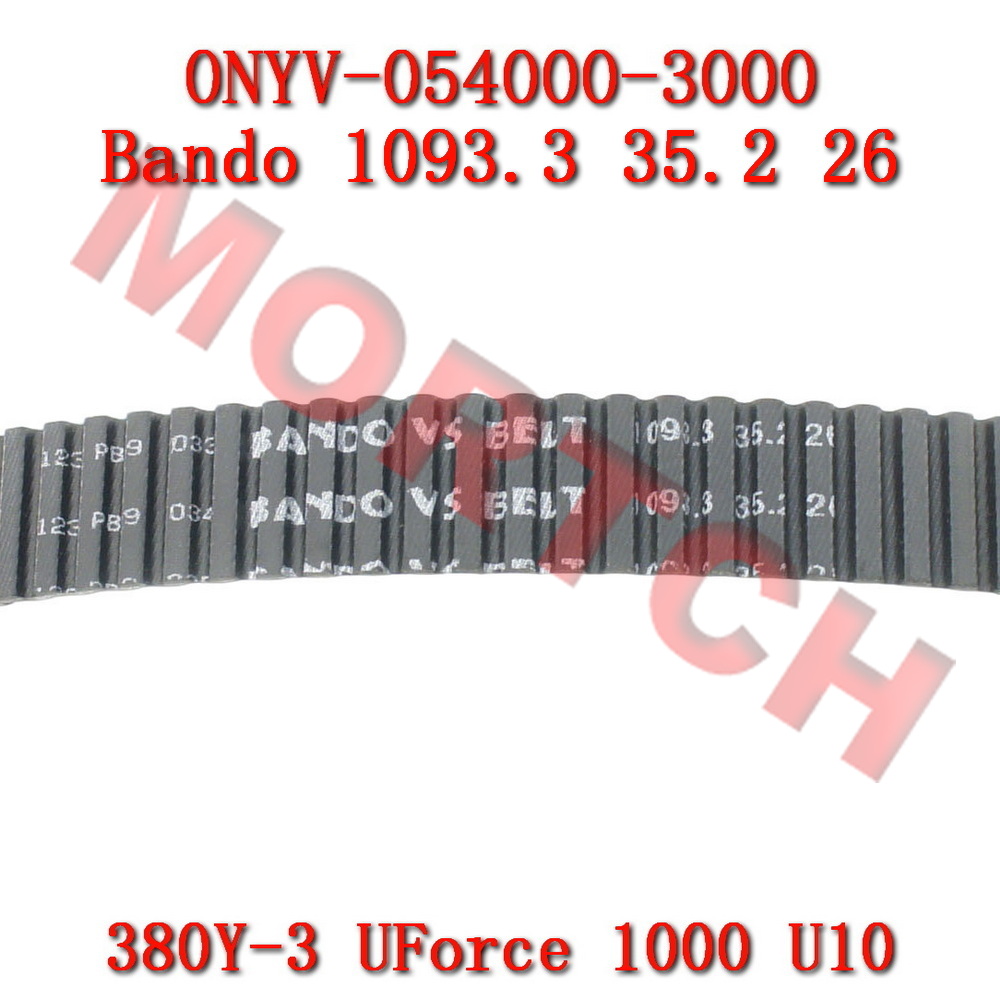
Bando Toothed Drive Belt 1093.3 35.2 26
|
|
|
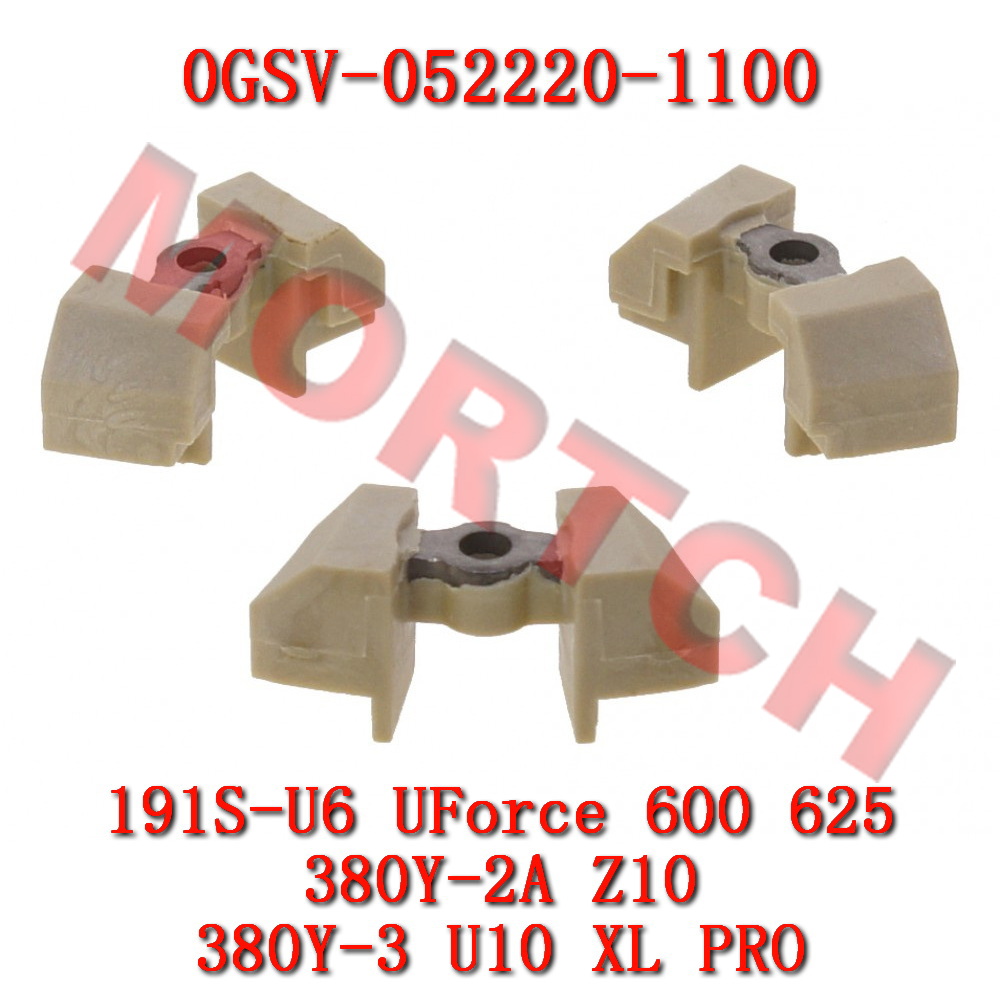
Guide Block Assy
|
|
| 2 | MICF0NYV-040020-1000 | |
| 3 | MICF0NYV-052101-2000 | |
| 4 | MICF0NYV-052100-3100 | |
| 5 | MICF0NYV-052110-3000 | |
| 6 | MICF0NYV-052120-3000 | |
| 7 | MICF0NYV-052131-3000 | |
| 8 | MICF0NYV-052135-3000 | |
| 9 | MICF0NYV-052136-3000 | |
| 10 | MICF0NYV-052137-3100 | |
| 11 | MICF0NYV-052141-3000 | |
| 12 | MICF0NYV-052150-3000 | |
| 13 | MICF0NYV-052160-3000 | |
| 14 | MICF0NYV-052101-3000 | |
| 15 | MICF0NYV-052102-3100 | |
| 16 | MICF0NYV-052103-3000 | |
| 17 | MICF0NYV-052104-3000 | |
| 18 | MICF0NYV-052105-3000 | |
| 19 | MICF0NYV-052106-3000 | |
| 20 | MICF0NYV-052107-3000 | |
| 21 | MICF0NYV-052108-5000 | |
| 22 | MICF0NYV-052109-5000 | |
| 23 | MICF0NYV-052201-3000 | |
| 24 | MICF0NYV-052202-3000 | |
| 25 | MICF0NYV-052203-2000 | |
| 26 | MICF0NYV-052200-3000 | |
| 27 | MICF0NYV-052230-3000 | |
| 28 | MICF0NYV-052211-3000 | |
| 29 | MICF0GSV-052202-1100 | |
| 30 | MICF0GSV-052201-1100 | |
| 32 | MICF0NYV-052220-3000 | |
| 33 | MICF0NYV-052240-3000 | |
| 34 | MICF0NYV-052203-3000 | |
| 35 | MICF0NYV-052204-3000 | |
| 36 | MICF0NYV-052206-3000 | |
| 37 | MICF0NYV-052205-3000 | |